
Running a Sex Offender Check in DuPage County
The Illinois Sex Offender Database gateway is the main state source. Illinois State Police maintains the database under the community-notification law. Search by a known name or use place fields to review reported DuPage County entries. Record the date of the search because address, compliance, and registration data can change.
The official Illinois gateway identifies the proper state starting point.
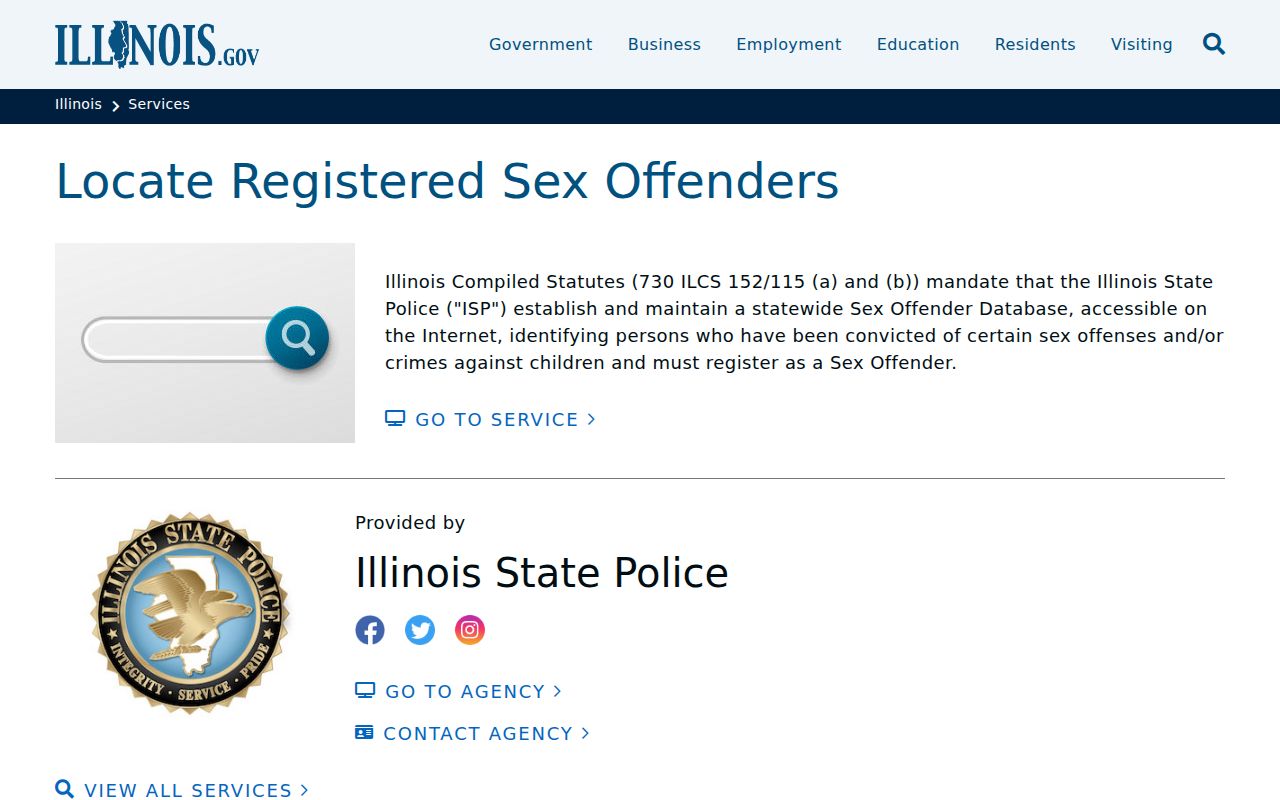
A returned entry is a notification record based on reported data. It is not proof of a new crime, a complete history, or an individual risk prediction.
Prepare more than a surname when possible. A first name, city, ZIP, or known jurisdiction can narrow common-name results. Still, a geographic match is not an identity match. Compare the photograph, aliases, physical descriptors, offense jurisdiction, and displayed verification data. If those details conflict, stop and ask the responsible agency. Never publish the profile elsewhere merely to seek help identifying someone.
DuPage Registry Jurisdiction Starts Locally
Registration takes place with the law-enforcement agency that has jurisdiction over the residence. A person living inside a DuPage municipality generally reports to that city's police department. An unincorporated DuPage County address routes to the DuPage County Sheriff. The correct agency matters for verification, changes, and a suspected reporting problem.
Duties vary by statutory status. Registrants report in person at required intervals and report changes within applicable deadlines. Call the police agency or Sheriff before visiting to confirm its current hours, appointment practice, and required identification. Do not use the public profile to confront a person or conduct an amateur compliance check.
City boundaries can also affect the registering agency. Naperville and other municipalities may cross county lines, so the place name alone is not always enough. Confirm the actual residence jurisdiction before directing a concern to DuPage County. If the displayed agency is outside DuPage, contact that listed jurisdiction or ISP. The public user reports facts; law enforcement determines whether a registration duty was missed.
Searching the Illinois Sex Offender Registry
The ISP portal supports name and place-oriented searches. Required fields can change with the search mode, so treat the interface as controlling. A location query is a geographic snapshot. A name query can return aliases or similar names. In either route, compare the official photograph and displayed descriptors without copying or republishing private profile details.
- Open the official Illinois registry gateway and review its conditions of use.
- Choose a name search or enter city, county, ZIP, address, radius, or map geography when the interface offers it.
- Review the result list or map. Do not assume a similar name or nearby pin establishes identity.
- Open the profile, check its source jurisdiction and last verification, then note the search date.
| Field label | Type | Required | Use |
|---|---|---|---|
| Last Name | Text | Mode-dependent | Name search |
| First Name | Text | Mode-dependent | Narrows name results |
| City or ZIP | Text/select | Mode-dependent | Place search |
| County | Select | Mode-dependent | Filter for DuPage County |
| Address, Radius, or Map | Geographic | Mode-dependent | Review reported locations near a place |
ISP Registry Versus NSOPW
Use ISP first for Illinois detail. Use the National Sex Offender Public Website when the search crosses a county or state line. NSOPW combines data from participating jurisdictions and supports name and location or radius searches. It requires acceptance of its conditions and may present a CAPTCHA.
The national interface is the broader geographic layer.
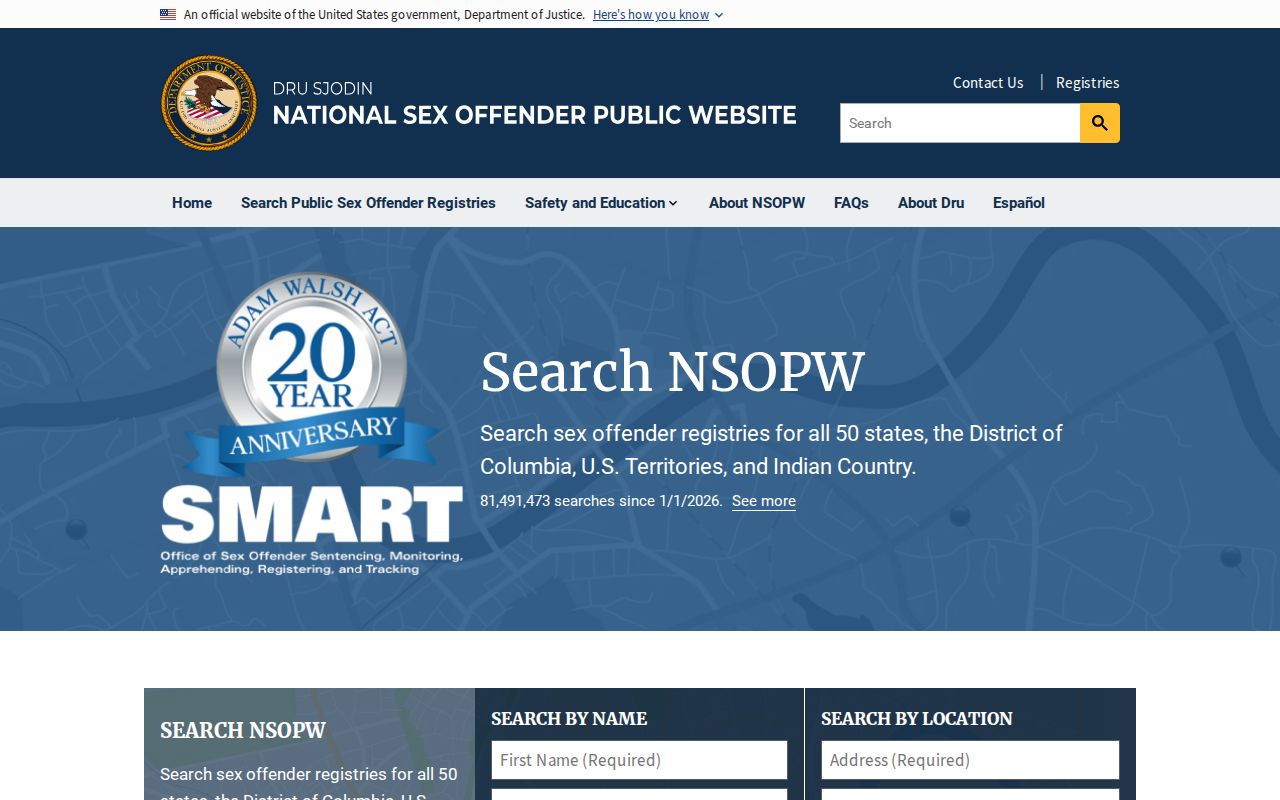
NSOPW does not cure a delay or error in the source jurisdiction's data. Return to ISP or the registering agency when an Illinois entry needs clarification.
The two systems also answer a different geographic need. ISP is best when the question is tied to Illinois classification and a DuPage address. NSOPW helps when a person may have moved across a state line or when a location search sits near a border. Search both with the same careful identifiers, save the date, and note which jurisdiction supplied each result. Do not treat duplicate results as two distinct people without checking the source record.
What a Registry Profile Shows
A profile may combine identity descriptors, reported location, registration status, and the qualifying case. Not every record presents every field. No individual entry is needed to understand the schema.
| Name & Aliases | Reported name forms used to help distinguish identities. |
|---|---|
| Photo & Physical Description | Official image plus sex, race, age or date of birth, height, weight, hair, eyes, and visible marks when supplied. |
| Registered Address | Primary, secondary, or transient location at the detail Illinois law permits; it can change. |
| Offense & Statute | Qualifying offense, conviction or adjudication date, and source jurisdiction where displayed. |
| Category | Illinois designation such as sex offender or sexual predator, not an assumed federal tier. |
| Registration Status | Compliance notation, registration period, responsible agency, and last verification when available. |
A profile does not establish guilt of any new conduct. It also does not contain every criminal case, guarantee a current address, or authorize harassment. Always read the conviction jurisdiction and date before connecting the notice to a court file.
Vehicle, work, school, victim-age category, scars, tattoos, and registration start or end data may appear when Illinois law permits and the source has supplied them. Their absence from one profile does not create a negative finding. A court docket remains the source for filed case events and signed orders. The registry instead summarizes information chosen for public notice under statute.
Report a Stale DuPage Address
An address can look stale because a person moved, is confined, is transient, reported to another jurisdiction, or has not yet appeared after a data transfer. Map pins can also be imprecise. Do not investigate the location or approach the person.
For suspected noncompliance, contact the police department that serves the listed municipality or the DuPage Sheriff for an unincorporated address. Give the agency the profile source and the observed discrepancy. ISP can address a state database issue. Call 911 only for immediate danger. A responsible report lets trained officers verify the facts under the registration law.
Keep the report factual and narrow. State when the registry was searched, which agency or county the profile names, and what appears inconsistent. Do not add rumors, demand a result, or circulate the address among neighbors. The registering agency can compare the report with information that is not public and decide whether follow-up is required. A profile can remain visible while an update is being processed, so a delay alone does not prove a violation.
Registration Requirements and Levels in Illinois
Illinois does not reduce its public registry to a simple consumer table of federal Tier I, II, and III labels. The category and governing statute control. Duration can also change through tolling, extensions, release dates, and offense-specific rules. The Sex Offender Registration Act, 730 ILCS 150 supplies the current legal text.
The official Act is the source for category-specific duties.
Use the displayed statutory designation rather than guessing from an offense name.
| Illinois category | General duration concept | Caution |
|---|---|---|
| Sex offender | Generally ten years after conviction, release, parole, or discharge | Tolling, extensions, and offense-specific rules can apply |
| Sexual predator | Lifetime registration | Verify the statutory designation |
| Sexually dangerous or violent person and other lifetime categories | Lifetime | Court and statutory status control |
| Murderer or violent offender against youth | Separate related registry regime | Do not conflate the databases |
A DuPage Registry Map Has Limits
Absence from a radius does not guarantee that no registrant is nearby. Public visibility depends on status, timely reporting, data transfer, and the geographic terms entered. A person may be outside the radius, in another jurisdiction, confined, transient, or associated with an address that has changed.
Residency and presence restrictions are also offense- and status-specific. Do not infer a universal school or park radius from a map pin. The registry address is not a land-use ruling. Use ordinary safety planning, verify the source date, and report a concrete discrepancy to law enforcement.
A radius search can omit a person whose pin falls just beyond the chosen distance. It can also show a location with less precision than a street-level reader expects. Search nearby ZIP codes or a broader map area when geographic awareness is the goal, then review the profile's own jurisdiction field. Even a wider search remains limited by reporting time, public-visibility rules, and participation by the source agency.
Lawful Use and Community Notification
Illinois provides registry information for public awareness and safety. The Sex Offender Community Notification Law, 730 ILCS 152 governs the state Internet database and notification framework.
The official community-notification law explains the public purpose and boundaries of release.
Use an entry for awareness, not punishment. Confirm identity and jurisdiction before relying on it.
No harassment or vigilantism: Registry information may not be used to threaten, harass, intimidate, or commit a crime against a registrant or household. Misuse can carry criminal or civil consequences under Illinois law, including 730 ILCS 152.
Community awareness works best when it stays tied to the public purpose of the database. Adults can use the official record to support routine family safety talks, review routes and meeting points, and contact law enforcement about a concrete concern. The profile does not authorize anyone to visit a home, test compliance, publish copied personal details, or organize pressure against a household.
Registry Status Is Not Supervision
A registry profile, a criminal court file, and a supervision record are distinct. The profile provides statutory notification. A circuit clerk holds the judgment and sentence. State parole or mandatory supervised release is administered through Illinois corrections structures, while the Illinois Prisoner Review Board makes specified release or revocation decisions.
The official Illinois Prisoner Review Board describes that separate authority.
Do not translate a registration duration into a custody term, parole status, or prediction about current conduct.